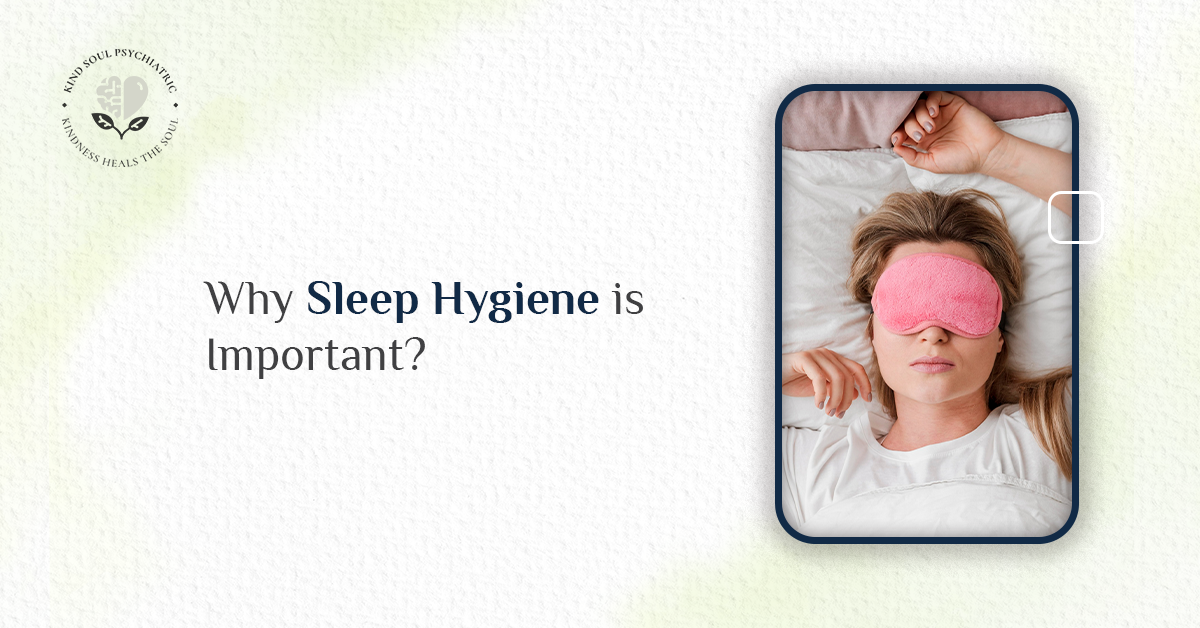
Sleep is like a superpower. It helps us feel happy, stay healthy, and do our best daily. But many people don’t get enough sleep because they don’t practice good sleep hygiene. We will explain why sleep hygiene is important, how it affects your body and mind, and share easy tips to help kids, teens, and adults sleep better.
Kind Soul Psychiatric helps you find calmer minds and lighter hearts. Healing begins here. Contact us today.
What Is Sleep Hygiene?
Your sleep quality benefits from the practices that make up sleep hygiene. Good sleep hygiene functions similarly to tooth brushing since it maintains the condition of your sleep. It includes:
- Going to bed at the same time every night.
- Avoiding screens before bedtime.
- Creating a calm, dark room for sleep.
Poor sleep results from neglecting good sleep habits. Your attitude grows sour, and your mindfulness slips while your illness bouts heighten.
Why Is Sleep Hygiene Important?
What makes sleep hygiene important constitutes the central question we should explore first. The brain, together with your body, demands sleep as its recharge mechanism. Poor sleep hygiene leads to three major consequences.
- Feel tired all day.
- Have trouble learning or remembering things.
- Get angry or sad more easily.
The relationship between sleep and mental health exists as a strong connection. Sleep problems can make anxiety and stress worse. But getting enough restful sleep can help you feel happy and relaxed.
How Lack of Sleep Affects the Brain
Did you know your brain works like a computer? It needs “shut-down time” to sort through the day’s information. How lack of sleep affects the brain is a big deal. Without enough sleep:
- Your brain can’t store memories properly.
- You might struggle to solve math problems or read.
- It’s harder to control your emotions (hello, tantrums!).
This is why deep sleep matters. Deep sleep is when your brain cleans out waste and repairs itself. No deep sleep = a foggy, slow brain!
Sleep Hygiene for Kids: Building Healthy Habits Early
Kids require more sleep than adults as they race through growth. Prioritizing sleep hygiene for kids means embracing bedtime routines.
- Establish a cozy bedtime for 9 to 12 hours of slumber (age matters).
- Indulge in a bedtime story or a soothing bath—leave out screens!
- Ensure that their bedroom is cool and distraction-free to invite dreams.
A bedtime routine is vital, whispering to the body, “Time to relax!” Kids who embrace these routines drift off faster and greet mornings with joy.
Sleep Hygiene for Teens: Beating the Late-Night Trap
Teenagers often find themselves waging war against bedtime. Their bodies need 8 to 10 hours of sleep, but homework, phones, and hormones get in the way. No need to fret! Here are some tips to help your night owl become a cozy sleeper:
- Skip the energy drinks and caffeine after lunch; it’s a trap!
- Activate “night mode” on devices; dim that blue light beast.
- A sleep hygiene assessment will reveal hidden bad habits that might involve smartphone use while trying to sleep.
Navigating sleep hygiene is difficult for teens, but even small changes can yield big rewards. Soothing tunes can help you relax more than binge-watching videos. They guide you softly into dreamland.
Effects of Poor Sleep: More than Just Yawning
Ignoring sleep hygiene doesn’t just make you tired. The effects of poor sleep can hurt your whole life:
- Insomnia causes: Stress, irregular schedules, or too much screen time.
- Weaker immune system (more colds and flu!).
- Weight gain (your body craves junk food when tired!).
People struggle to appreciate their activities, sports, and relationships with friends when their sleep becomes poor.
Tips to Improve Sleep Naturally
Try these tips to sleep better naturally:
- Get sunlight in the morning—it resets your body clock.
- Exercise daily, but not right before bed.
- Eat light at night—avoid heavy meals 2 hours before bed.
Parents and teachers can use therapist-aided sleep hygiene tools, like printable checklists or relaxation exercises, to guide kids and teens.
Why Deep Sleep Matters for Your Health
Deep sleep matters because it isn’t just about feeling rested. During deep sleep:
- Your muscles repair themselves.
- Your heart gets stronger.
- Your brain stores what you learned that day.
Without enough deep sleep, you’ll feel “off” even if you spend 8 hours in bed. That’s why a steady sleep hygiene routine is key!
The Importance of a Bedtime Routine
People of all ages need to establish a proper bedtime routine. It’s important for everyone. Try these steps:
- 20 minutes before bed: Turn off screens.
- 15 minutes before bed: Brush teeth and put on pajamas.
- 10 minutes before bed: Read, meditate, or listen to soft music.
This routine tells your brain, “Time to power down!”
Sleep and Mental Health: The Hidden Connection
Ever notice you feel cranky after a stormy night’s sleep? That’s sleep and mental health working together. Poor sleep can:
- Make stress feel overwhelming.
- Increase sadness or worry.
- Make it hard to enjoy fun activities.
Quality sleep enables patients to maintain their creativity while remaining resilient and patient.
How to Do a Sleep Hygiene Assessment
Identify sleep hygiene issues to determine sleep-related problems.
- Do I go to bed at different times every night?
- Is my bedroom too bright or noisy?
- Do I drink soda or eat candy before bed?
Fix the “yes” answers, and you’ll sleep better quickly!
Final Thoughts: Sleep Well, Live Well
The maintenance of good sleep practices leads to life improvements. A few simple modifications will generate significant effects. Bedtime routines help everyone, from kids to teens to adults. Shorter screen time and a comfortable room temperature improve well-being for all.
Sleep does not waste your time since it provides vital energy to your body and mind. Set your sleep time for today to witness the positive effects of tomorrow’s brightness.
FAQs
Q. What if I lie awake at night?
Take slow breaths or picture a calm place. If you’re still awake after 15 minutes, get up quietly and try again later.
Q. What’s a sleep hygiene assessment?
It’s a checklist to find out what’s hurting your sleep. Ask yourself, “Do I have a regular bedtime?” Fixing “no” answers can help you sleep better!