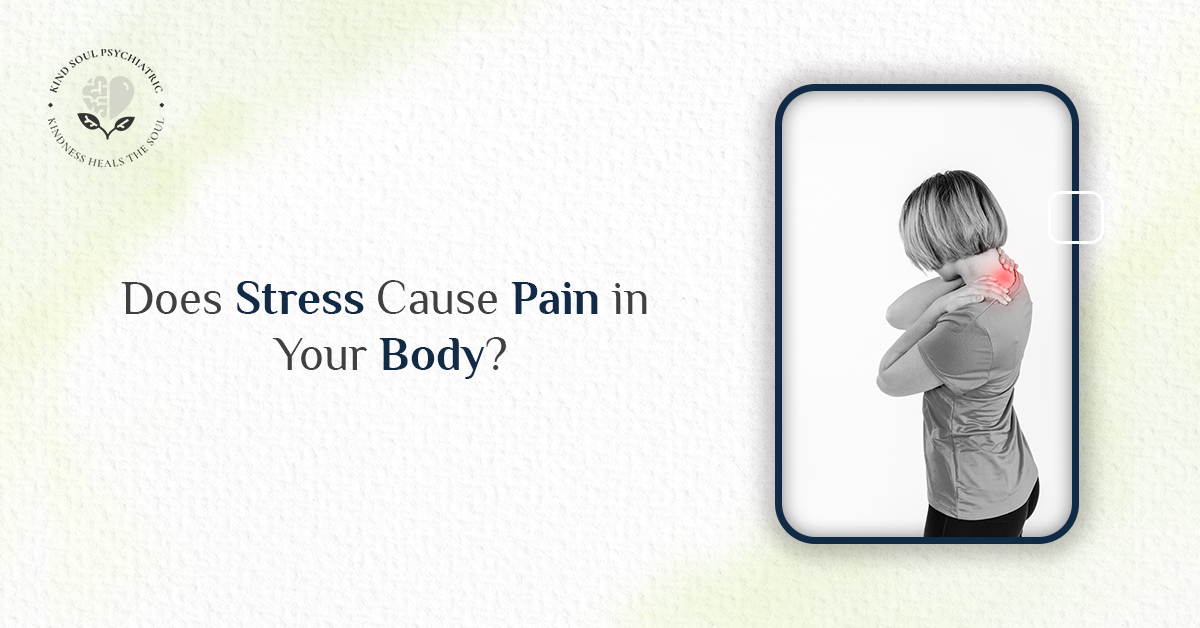
Does stress cause pain in your body? The answer is yes.
It often does.
Physical repercussions accompany stress’s mental and emotional state because it produces strong bodily reactions.
The physical signs of stress include severe headaches alongside muscular tension and constant pain that may surprise many individuals.
The mechanism of this process remains unclear, along with your options for intervention.
Stress and physical pain have a known relationship that enables people to control their current body symptoms.
This blog will explain the scientific basis of stress impact with practical advice to help you minimize health problems that arise from the stress effect, along with guidelines to create a stress free living.
How Does Stress Cause Pain in Your Body?
When you react to stress, your body initiates survival operations, which science calls the “fight or flight” response.
The nervous system sends a signal that releases adrenaline and cortisol hormones to help combat threats.
The proper emergency response function of stress can result in health difficulties when the stress becomes persistent.
Your body stays locked in tension whenever stress persists for more extended periods. Body tightness and growing inflammation create the conditions for pain development.
Daily pressures create several health problems that include tension, headaches, along with neck pain as well as digestive issues.
Long-term stress exposure has been scientifically associated with developing fibromyalgia and arthritis as chronic diseases.
When your body remains in stress mode, it creates obstacles to healing processes that produce feelings of exhaustion as well as pain symptoms.
Understanding physical stress symptoms starts by analyzing how the nervous system functions when people experience stress.
How Stress Affects the Nervous System
Your body relies heavily on its nervous system as its prime stress management controller.
Acute stress sends signals through your sympathetic nervous system that increase heart rate and pump blood toward essential muscles for quick response.
The parasympathetic nervous system maintains body relaxation, yet persistent stress disrupts its operations to keep the body calm.
The continuous uneven state alters your experience of bodily discomfort.
The body’s stress response leads to misregulated serotonin and dopamine release, decreasing the ability to perceive pain.
Various minor stresses that accumulate in time eventually generate noticeable physical distress.
If stress has affected your life, consider how to manage it.
The Link Between Stress and Pain
Luckily, starting now, there are ways to break the cycle and feel better.
Stress, which becomes persistent, produces an immediate link to actual bodily discomfort.
When stress triggers muscle tension problems, it frequently gives rise to tension headaches along with neck pain.
Stress produces negative impacts on chronic medical problems that include fibromyalgia in addition to arthritis and irritable bowel syndrome (IBS).
The stress effect on your body creates a repetitive pattern that starts when stress triggers bodily pain, resulting in stress formation that repeats over and over again.
What steps should you take if your back pain has prompted you to avoid exercise activities? Your poor sleep quality may result from managing multiple responsibilities at once.
You should focus on getting stress free living—effective methods exist that enable you to escape this cycle while immediately improving your current well-being.
Let’s talk about them below.
30 Ways to Reduce Stress and Pain
If you’re searching for any tips, here’s a list of 30 ways to reduce stress and minimize its physical effects:
- Meditate daily for even 5-10 minutes.
- Practice deep, mindful breathing exercises.
- Low-intensity activities that combine stretching with walking and swimming will prove beneficial.
- Experiment with yoga or pilates.
- Cutting down on caffeine intake will reduce the stress effect.
- Lower the amount of sugar you consume throughout the day.
- Make a habit of writing your list of gratitude before going to bed.
- Laugh! Watch comedy films or sitcoms.
- Establish clear boundaries while developing your ability to refuse requests.
- Cancel unnecessary commitments.
- Spending time outdoors renders peace to your mind.
- Focus on posture. Correcting it might reduce tension.
- Your stress levels and energy levels decrease when you hydrate adequately because dehydration acts as a stress factor.
- Get a massage appointment combined with an acupuncture appointment.
- Perform a digital break by turning off electronic devices.
- Purchase upgraded bedding materials such as pillows to achieve better sleep quality.
- Aromatherapy will help you achieve total relaxation through your sensory perceptions.
- Listen to soothing playlists.
- Try journaling to vent your frustrations.
- Tell your closest friend about the issues troubling you.
- Enhance your diet by eating salmon and walnuts, rich in Omega-3 fatty acids.
- Practice progressive muscle relaxation exercises.
- Organize your thoughts using lists to manage stress and discomfort.
- Clutter in your living space generates excess mental strain.
- Develop a solid bedtime routine.
- Walk outside barefoot for “grounding.”
- You can use Calm and Headspace applications to find step-by-step relaxation guidance.
- Place support systems in both work and personal life.
- Consult with a therapist to gain specialized recommendations.
- Practice gratitude towards yourself and the progress you make.
Questions About Stress? Help Is Here.
Do you have any further questions about stress, along with its part in generating pain?
It is standard for people to respond differently to complex situations since stress uniquely affects each person.
Your circumstances need understanding because they form the basis of your stress levels and pain experience.
You can find relief through available solutions.
There are additional options to help you deal with stress if your current strategies are ineffective or if your chronic pain worsens beyond your control.
Speak to a Professional at Kind Soul Psychiatric
At Kind Soul Psychiatric, we understand how deeply stress can affect your life.
Our team provides expert care to address stress and its physical impact.
Schedule a consultation. The relief you’re looking for might just be one call away.